
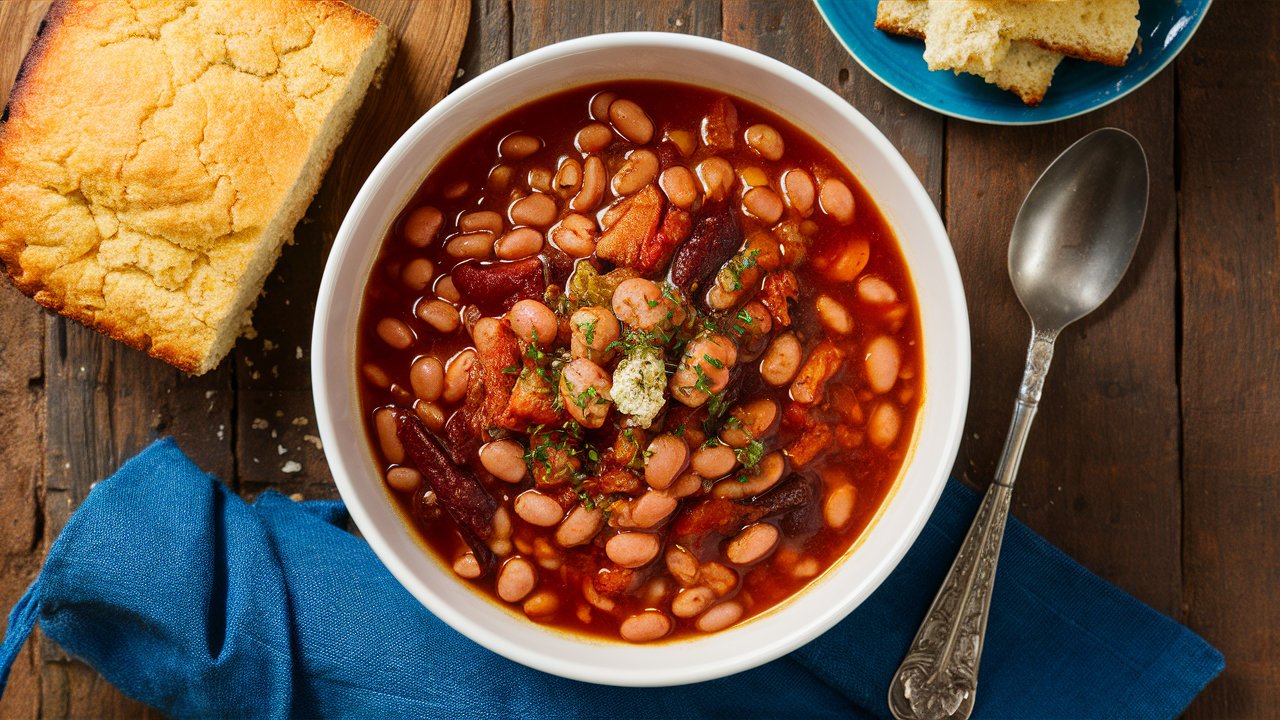
Few meals represent comfort and tradition as perfectly as beans and cornbread. This humble yet satisfying combination has been a staple in many households for generations, particularly throughout the Southern United States. The dish is loved for its simplicity, affordability, and hearty flavor. While it may appear simple at first glance, beans and cornbread hold deep cultural roots and provide a delicious example of how basic ingredients can create a memorable meal. Whether enjoyed as a weeknight dinner or a nostalgic dish that reminds people of family gatherings, beans and cornbread continue to be cherished by many food lovers.
The beauty of beans and cornbread lies not only in its taste but also in its versatility. Different regions and families have their own variations, adding ingredients such as smoked meats, spices, vegetables, or special seasonings to give the dish a unique twist. Despite these differences, the heart of the meal remains the same: slow-cooked beans paired with warm, golden cornbread fresh from the oven.
The History of Beans and Cornbread
The tradition of beans and cornbread dates back centuries and reflects the resourcefulness of early American cooking. Cornbread originates from Native American cooking traditions, where ground corn was used to make simple breads cooked over fire or on hot stones. When European settlers arrived, they adopted corn as a staple crop because it grew well in many climates and was easy to store.
Beans were another affordable and nutritious ingredient widely available throughout North America. They provided essential protein and fiber, making them an important food source for families who needed filling meals that could feed many people. Combining beans with cornbread created a balanced meal that was both economical and nourishing.
Over time, the dish became deeply associated with Southern cuisine. Many rural families relied on beans and cornbread during difficult times because the ingredients were inexpensive and easy to prepare in large quantities. Today, the dish remains popular not only for its flavor but also for the cultural heritage it represents.
Why Beans and Cornbread Are the Perfect Pair
Beans and cornbread complement each other in both taste and texture. The soft, savory beans provide a rich and hearty base, while the slightly sweet and crumbly cornbread offers contrast and balance. Together they create a satisfying meal that feels warm, comforting, and filling.
Another reason this combination works so well is nutritional balance. Beans are packed with protein, fiber, vitamins, and minerals, while cornbread provides carbohydrates that give the body energy. When eaten together, they create a complete meal that can keep you full for hours.
The flavor pairing is also remarkable. The savory depth of slow-cooked beans blends beautifully with the mild sweetness of cornbread. Many people enjoy dipping pieces of cornbread directly into the beans, allowing the bread to soak up the flavorful broth. This simple act enhances the entire eating experience.
Ingredients for Traditional Beans and Cornbread
A classic beans and cornbread meal relies on a few basic ingredients that are easy to find in most kitchens.
Ingredients for the Beans
-
Dried pinto beans or navy beans
-
Onion
-
Garlic
-
Salt and black pepper
-
Smoked ham hock or bacon (optional)
-
Water or broth
Ingredients for the Cornbread
-
Cornmeal
-
Flour
-
Baking powder
-
Sugar (optional depending on preference)
-
Eggs
-
Milk or buttermilk
-
Butter or oil
These ingredients combine to create a dish that is simple yet incredibly satisfying. Many cooks add personal touches such as jalapeños, cheese, or herbs to give the cornbread extra flavor.
How to Make Beans and Cornbread
Cooking the Beans
To prepare the beans, begin by rinsing dried beans and soaking them overnight in water. This helps soften the beans and reduces cooking time. The next day, drain the beans and place them in a large pot with fresh water or broth. Add chopped onion, garlic, and your choice of seasoning. If you enjoy smoky flavor, a ham hock or a few pieces of bacon can be added to the pot.
Allow the beans to simmer slowly for several hours until they become tender and flavorful. Slow cooking is important because it allows the beans to absorb the seasonings and develop a rich broth. Stir occasionally and adjust salt or spices according to taste.
Baking the Cornbread
While the beans cook, prepare the cornbread batter. In a mixing bowl, combine cornmeal, flour, baking powder, and a pinch of salt. In a separate bowl, mix eggs, milk, and melted butter. Slowly combine the wet and dry ingredients until a smooth batter forms.
Pour the batter into a greased baking pan or cast-iron skillet. Bake in a preheated oven at about 375°F (190°C) for 20 to 25 minutes or until the top becomes golden brown. The result should be a soft interior with a slightly crisp crust.
Once finished, serve warm slices of cornbread alongside a bowl of steaming beans for a classic and comforting meal.
Popular Variations of Beans and Cornbread
Although the traditional version remains beloved, many variations have developed over time. Some cooks prefer spicy beans made with chili peppers or hot sauce, while others add vegetables such as tomatoes, bell peppers, or greens. In some regions, sweet cornbread is favored, while in others a more savory version without sugar is preferred.
Another popular variation includes adding cheese or jalapeños to cornbread batter. This creates a richer flavor and adds a slight kick of spice. Some families also cook beans with sausage or smoked turkey instead of ham to create different flavor profiles.
These variations demonstrate how flexible the dish can be while still maintaining its comforting identity.
Why Beans and Cornbread Remain Popular Today
Despite the availability of countless modern recipes, beans and cornbread continue to hold a special place in many kitchens. One reason is the simplicity of the ingredients. The dish can be made with inexpensive pantry staples, making it an ideal option for families who want a filling meal without spending too much money.
Another reason for its popularity is nostalgia. Many people associate beans and cornbread with childhood memories, family dinners, or traditional gatherings. Food often carries emotional meaning, and this dish is a perfect example of how a simple meal can bring people together.
Additionally, the growing interest in traditional and home-cooked meals has helped keep this classic dish relevant in modern kitchens.
Tips for the Best Beans and Cornbread
To make the most flavorful beans and cornbread, there are a few helpful tips to keep in mind. First, allow the beans to cook slowly and patiently. Rushing the process can prevent them from reaching their full flavor potential. Second, consider using a cast-iron skillet for cornbread because it helps create a crispy golden crust that many people love.
Another helpful tip is to season gradually. Adding spices and salt in stages allows you to control the flavor more precisely. Finally, always serve cornbread warm for the best texture and taste.
Conclusion
Beans and cornbread represent more than just a meal—they symbolize tradition, comfort, and the beauty of simple cooking. This classic combination has stood the test of time because it offers rich flavor, satisfying texture, and affordable ingredients that almost anyone can prepare at home. From its historical roots to its modern variations, beans and cornbread continue to bring warmth and nourishment to tables around the world.
Whether you prepare it as a nostalgic family dinner or try it for the first time, this timeless dish proves that great food does not need to be complicated. Sometimes the most memorable meals are the ones made with the simplest ingredients and shared with the people we care about.
Frequently Asked Questions (FAQ)
1. What type of beans are best for beans and cornbread?
Pinto beans are the most commonly used choice, but navy beans, black beans, or kidney beans can also work well depending on personal preference.
2. Is cornbread supposed to be sweet or savory?
This depends on regional and personal preference. Southern cornbread is typically savory, while some other regions prefer a slightly sweet version.
3. Can beans and cornbread be made vegetarian?
Yes. Simply cook the beans with vegetable broth and omit meat products like bacon or ham.
4. How long do cooked beans last in the refrigerator?
Cooked beans can usually be stored in the refrigerator for about three to five days in an airtight container.
5. Can beans and cornbread be frozen?
Yes. Both beans and cornbread freeze well. Store them separately in airtight containers and reheat when ready to eat.